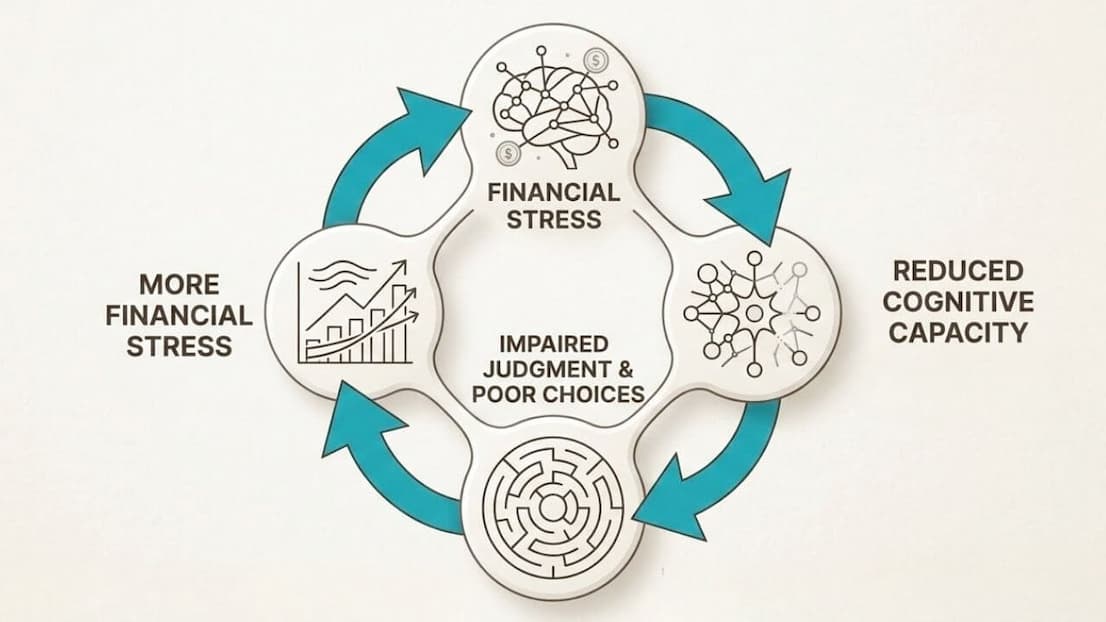
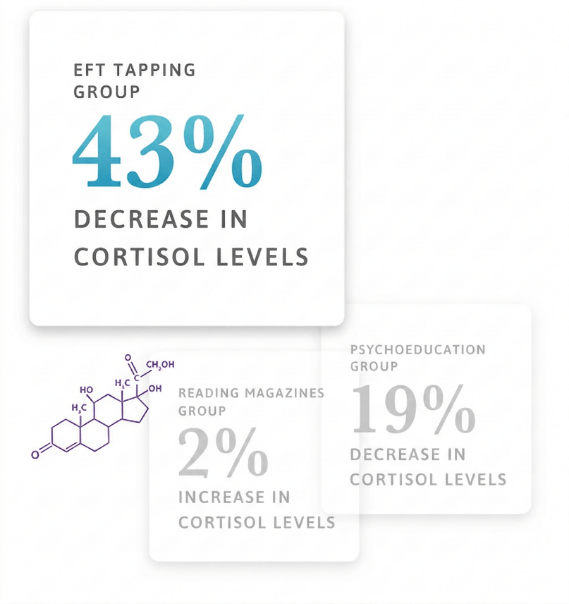
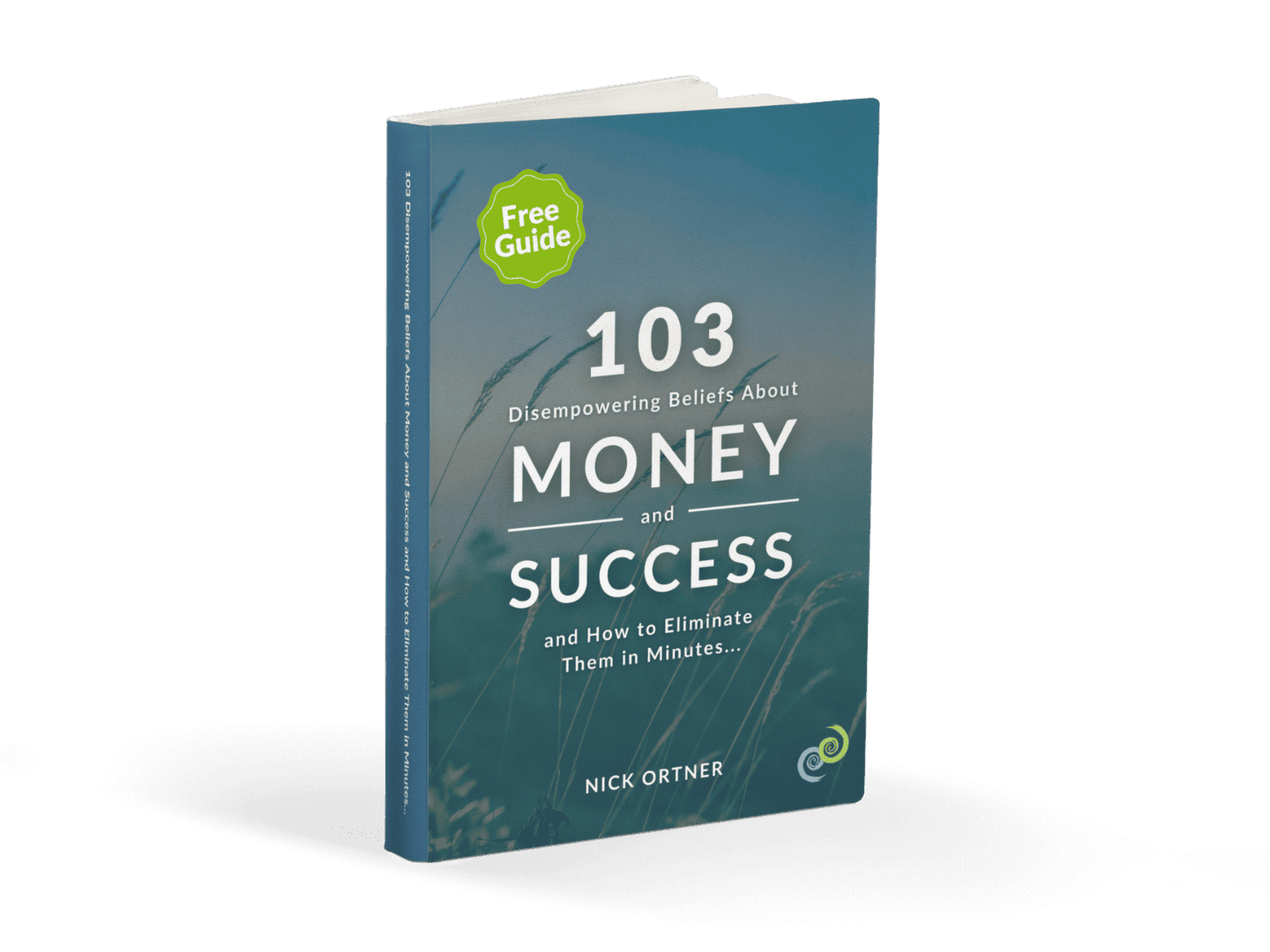
| Hi Gini, Have you ever noticed that when you're stressed about money, it's harder to think clearly about… well, everything? There's actually a fascinating reason for that. In a landmark 2013 study published in the journal Science, researchers from Harvard, Princeton, and the University of Warwick wanted to understand what happens to your brain when you're worried about finances. So they ran an experiment at a New Jersey shopping mall. They gave people a simple scenario: your car breaks down, and the repair costs $1,500. After presenting the problem, they tested the people's cognitive ability. Here's what they found: For people who were financially comfortable, thinking about the expense had no effect on their brainpower. But for people already stressed about money, just thinking about the cost dropped their cognitive performance by the equivalent of 13 IQ points. That's the same as losing an entire night's sleep. From just thinking about a financial problem. But the researchers didn't stop there. They traveled to India and studied sugarcane farmers who get paid once a year at harvest time. They tested the same farmers once when they were struggling financially before harvest, and once after they'd been paid. Same farmers. Same brains. But before harvest, when money was tight and the worry was constant, their cognitive performance was significantly worse compared to when they'd gotten paid (even after the researchers controlled for nutrition, physical labor, and stress levels). Financial worry was quietly consuming their mental bandwidth in the background. Think about what that means for your everyday life. When you're stressed about money — whether it's inflation, retirement, unexpected bills, whatever your version is — your brain works with less capacity. Less creativity. Less focus. Less ability to see opportunities clearly. The worry itself makes it harder to think your way to a better situation. So how do you break the loop? You have to address the stress itself, not just the external financial situation. Because until you calm the nervous system down, you're trying to solve problems with a brain that's running at reduced capacity. This is where Tapping comes in. Tapping has been documented in studies to reduce cortisol – your body's primary stress hormone – by 24 to 43%. The control groups in these studies only saw a reduction of up to 19%. That's not a small shift. That's your brain getting its bandwidth back. When you tap on the stress and fear and limiting beliefs around money, you're not just "feeling better." You're restoring the cognitive capacity you need to actually make clear, creative, empowered financial decisions. I actually put together a free guide on this topic, called "103 Disempowering Beliefs About Money and Success and How to Eliminate Them in Minutes." It walks you through the specific beliefs that might be running in the background of your mind (many of them picked up in childhood), quietly eating up your mental bandwidth without you even realizing it. And it gives you a simple process to start releasing them with Tapping. You might not be able to control inflation or the economy. But you absolutely can free up the mental energy that financial worry has been stealing from you. And when you do, everything shifts. Until next time… Keep Tapping! Nick Ortner P.S. One of our users put it perfectly: "For the first time in my adult life, I am optimistic about my finances… I have never felt more confident, free from my old "stories" or available to receive all the good that has been flowing my way." If you'd like to feel that shift, the guide is a great place to start. Grab your free copy here. | 


No comments:
Post a Comment